



SEO for Dental Practices: How to Get Found and Win More Patients
A dental website can look professional and still be almost invisible when prospective patients search for treatment. The problem is rarely one missing keyword. Dental practices compete across Google Maps, local organic results, treatment searches, reviews and increasingly AI-assisted search. Winning useful visibility requires all of those elements to support the same message: where the practice is, which treatments it provides and why a patient can trust it.
This guide explains SEO for dental practices from a practice owner’s perspective. It covers the strongest recommendations found across leading dental SEO guides—Google Business Profile, local optimization, service pages, technical SEO, content, reviews, links and measurement—and puts them in a sensible order. The goal is not simply more traffic. It is more relevant calls, online bookings and appointment requests from people the practice can actually treat.
What Is Dental SEO?
Dental SEO is the process of improving a dental practice’s visibility in unpaid search results when prospective patients look for a dentist, a specific treatment or urgent help. It combines local SEO for dentists with website content, technical performance, reputation signals and authority from other relevant websites.
General SEO can attract readers from anywhere. Dentist SEO must usually turn searches within a realistic travel radius into appointments. That makes location, availability, trust and treatment intent more important than raw traffic. A useful strategy must therefore consider two connected search surfaces:
- Google Maps and the local pack: often prominent for searches such as “dentist near me” or “emergency dentist in [city].”
- Organic results: practice websites, treatment pages, directories and informational resources below or around the map results.
Google explains that local results are mainly based on relevance, distance and prominence. You cannot change the patient’s distance from the practice, but you can improve how clearly Google understands the practice and how credible it appears.
Why SEO Matters for a Dental Practice
Patients do not all search in the same way. One person searches for a nearby check-up, another compares implant providers, and someone with sudden pain looks for an available emergency dentist. Each query represents a different level of urgency, value and information need.
SEO for dental practices helps a clinic become visible throughout that decision process. Unlike advertising, organic visibility does not disappear when daily media spend stops. Unlike social media, search reaches people who are already expressing a need. This does not make SEO free or automatically better than every other channel; it makes SEO an asset that can compound when the site, profile and reputation are maintained.
The business objective matters. A fully booked practice may want a better treatment mix rather than more enquiries. A new location may prioritize local awareness. A specialist may need to reach patients and referring professionals. Your SEO plan should follow capacity and commercial priorities, not search volume alone.
How to Get More Dental Patients Without Chasing Every Channel
Practice growth does not require doing everything at once. Start with the shortest broken step in the patient journey. If the practice is absent from local results, prioritize dental local SEO. If people visit but do not enquire, improve trust, treatment information and booking usability. If the practice needs demand immediately, paid search may support the organic plan. If suitable enquiries arrive but do not become attended appointments, marketing may not be the primary constraint.
This distinction protects the budget. A local dentist SEO campaign should not be judged by national blog traffic, and a cosmetic-treatment campaign should not be judged only by the total number of calls. Define a qualified enquiry with the reception and clinical team before selecting channels.
Local SEO for Dentists: Build the Foundation First
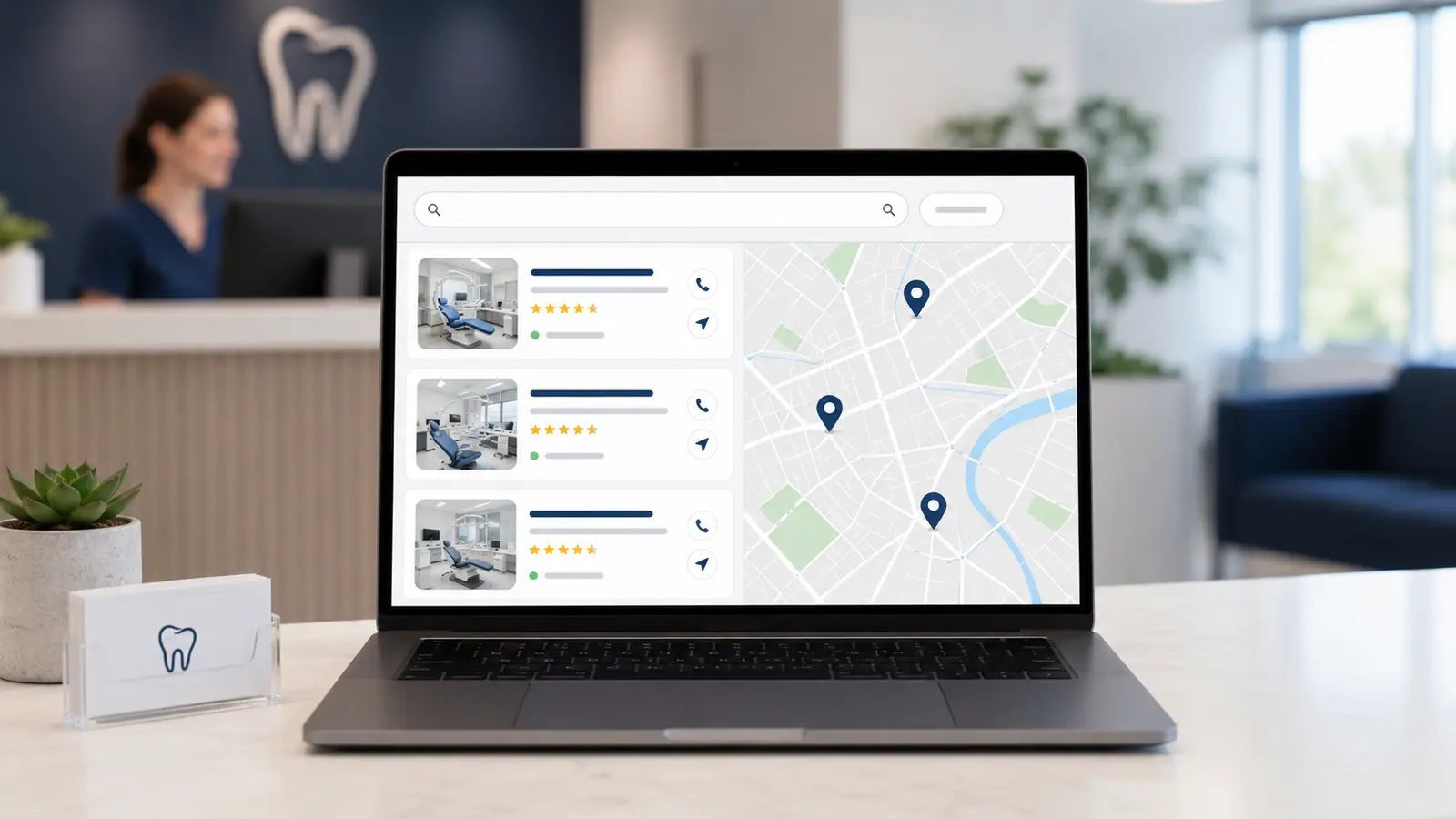
Local SEO for dentists is the core of most dental search strategies. A practice can have excellent articles and still lose nearby patients if its profile is incomplete, its address differs across directories or its treatment information is difficult to verify.
Optimize the Google Business Profile
Claim and verify the profile, select the most accurate primary category and add relevant secondary categories without stretching what the practice provides. Complete the address, phone number, website, appointment link, opening hours and special hours. Add authentic images of the exterior, reception, treatment rooms and team so a new patient knows what to expect.
Services should reflect actual treatments. The practice name should remain the real-world name; adding cities or keywords purely for rankings can violate Google’s guidelines. Keep the profile active, but do not confuse activity with strategy: accurate information, reviews and a strong connected website matter more than posting for the sake of posting.
Keep practice information consistent
Your name, address and phone number should be consistent on the website, Google Business Profile and important directories. Minor formatting differences are not a crisis, but old phone numbers, former addresses, duplicate profiles and inconsistent practice names create real confusion.
Audit the listings that patients and search engines are likely to encounter: major maps, local business directories, healthcare directories, professional associations and insurer or appointment platforms relevant to your market. Correct inaccurate entries before creating more citations.
Create a clear location page for each real practice
A multi-location group needs one useful page per physical practice, not dozens of doorway pages targeting surrounding towns. Each location page should contain its own address, phone number, hours, transport and parking details, accessibility information, team, treatments, appointment route and original photographs.
Link every verified profile to the most relevant location page. Use a location finder only if it helps visitors; do not make patients click through several layers to find a phone number.
Map Treatments to the Way Patients Search
A single “Treatments” page cannot rank effectively for every service and rarely gives a nervous patient enough information to book. Build the structure around meaningful treatment groups and actual demand.
| Search intent | Best destination | Information to include |
|---|---|---|
| General local care | Main location or general dentistry page | Who you treat, core services, hours, location and booking options |
| Specific treatment | Dedicated treatment page | Suitability, process, clinician, alternatives, fees or finance context and FAQs |
| Urgent problem | Emergency dentistry page | Symptoms you handle, availability, what to do next and clear limitations |
| Brand or clinician | About, team or clinician page | Qualifications, role, professional registration and areas of practice |
| Research question | Clinically reviewed guide or FAQ | A direct answer, risks, alternatives and route to appropriate professional advice |
Keyword research should cover the language patients use rather than only clinical terminology. Compare treatment terms, problems, local modifiers and questions. Then inspect the search results: a keyword that produces mainly informational guides should not automatically be forced onto a commercial treatment page.

Avoid producing separate pages for synonyms that mean the same thing. One authoritative page about dental implants is usually stronger than thin pages for every slight wording variation. Conversely, genuinely distinct services—such as emergency care, orthodontics and dental implants—deserve distinct pages when the practice actually offers them.
Build Dental Treatment Pages That Earn Trust
High-quality treatment pages must serve patients before search engines. Explain what the treatment is, who may be suitable, what an assessment involves, how the process normally works, meaningful benefits and limitations, possible alternatives and the next step. The page should make clear that individual suitability requires a professional examination.
Add the treating clinician or responsible reviewer with accurate qualifications and a link to a detailed profile. Include an updated or reviewed date when the content is genuinely reviewed. Cite primary or recognized professional sources for medical statements. Google says that trust receives particular weight for content that can affect health, and recommends clear authorship and demonstrable expertise in its guidance on helpful, reliable content.
Do not turn a treatment page into a collection of guarantees. Before-and-after images, testimonials, pricing claims and descriptions of outcomes must follow the professional and advertising rules in the practice’s jurisdiction. SEO does not override clinical accuracy or informed consent.
Dental Website Design and SEO Must Work Together
Dental website design SEO is not about adding keywords after the design is finished. The site must help a visitor answer four questions quickly: Do you provide the treatment I need? Are you close enough? Can I trust this practice? How do I contact or book?
On mobile, show readable content, a simple menu and clear call or booking actions without covering the page with pop-ups. Keep essential information in HTML rather than hiding it inside images. Use descriptive page titles, one clear H1, logical subheadings and internal links between relevant treatment, location and clinician pages.
The conversion path should match the practice workflow. If online booking is available, identify which appointments can genuinely be booked. If an assessment is required, say so. Do not label a generic contact form “Book now” if the submission does not reserve an appointment.
Is your dental website visible for the treatments that matter?
Klucco can audit your rankings, local presence, website structure and conversion path, then turn the findings into a prioritized SEO plan.
Technical SEO for Dental Websites
Technical SEO ensures that search engines can access, understand and index the pages patients need. Start with a crawl and indexation review rather than chasing a perfect tool score. Our guide to a technical SEO audit explains the broader process.
- Keep important treatment and location pages indexable and included in the XML sitemap.
- Redirect retired URLs to the closest useful replacement; do not send everything to the homepage.
- Resolve accidental duplicates caused by URL parameters, old staging sites, HTTP versions or inconsistent trailing slashes.
- Use canonical tags consistently, but do not rely on canonicals to repair a confused structure.
- Improve mobile performance by compressing images, reducing unnecessary scripts and using stable layouts.
- Protect the site with HTTPS and keep the CMS, plugins and forms maintained.
- Check that booking tools and JavaScript do not hide essential content or prevent conversion measurement.
Structured data can help search engines interpret the organization, location, breadcrumbs and page entities. Use markup that accurately reflects visible content. Do not add unsupported ratings, medical claims or properties simply because a plugin offers them.
Reviews and Reputation Management

Reviews influence patient confidence and can support local prominence. Create a repeatable, policy-compliant process: ask eligible patients for honest feedback, make the route simple and respond professionally. Never buy reviews, filter requests so only happy patients reach Google or publish private health details in a response.
A negative review is not automatically an SEO disaster. A calm response can show prospective patients how the practice handles concerns. Keep the reply general, protect confidentiality and move detailed discussion to a private channel. Follow the rules of the platform and local healthcare privacy requirements.
Google’s Maps user-contributed content policy prohibits fake engagement and rating manipulation. Review software can make requests easier, but it must not turn feedback into a filtered system that diverts criticism while sending only positive respondents to Google.
Dental Content Marketing That Supports Patient Decisions
Dental content marketing should support treatment and patient questions, not become a publishing treadmill. Begin with gaps that repeatedly appear in enquiries, consultations and search data. Useful formats include treatment comparisons, preparation guides, aftercare information, fee explanations, clinician Q&As and guidance on when to seek urgent care.
Every medical article should have a defined audience, purpose and reviewer. Link it to the relevant treatment page and make the next step clear. Update time-sensitive information rather than changing the date without reviewing the substance.
Earn Relevant Links and Local Mentions
Links remain useful when they reflect genuine authority or relationships. Relevant opportunities can include professional bodies, local organizations, community partnerships, suppliers, educational initiatives and reputable media. A local sponsorship can be valuable for the community even without a link; the link should not be the only reason for the activity.
Avoid bulk directory packages, paid guest-post networks and identical location citations created only to manipulate rankings. Audit existing backlinks before buying anything. Quality, relevance and editorial legitimacy matter more than a large count.
Google Ads for Dentists: When Paid Search Complements SEO
Google Ads for dentists can create immediate visibility for selected treatments or a new location while SEO develops. It is also useful for testing whether a search theme generates qualified enquiries before investing heavily in organic content.
Paid and organic search should share landing-page insights, negative keyword findings and conversion data, but they are not interchangeable. Ads cannot repair a confusing website, and SEO cannot guarantee immediate demand. Use dedicated, relevant landing pages and validate call, form and booking tracking. Klucco’s Google Ads audit checklist shows what to verify before scaling spend.
Measure Appointments, Not Just Rankings

Rankings vary by location and are only one diagnostic metric. Measure visibility together with meaningful actions and capacity. A practical dashboard can include:
- non-brand clicks and impressions for priority treatments;
- Google Business Profile calls, directions and website visits;
- calls, appointment requests and completed online bookings by landing page;
- conversion rate for treatment and location pages;
- qualified new-patient enquiries and, where the practice can report it safely, attended appointments;
- coverage and accuracy of priority listings;
- review volume, recency and response process.
Configure analytics to avoid collecting unnecessary health information. Do not place symptoms, treatment selections or patient details into URLs, analytics event labels or advertising audiences without a compliant plan. Your legal and privacy advisers should review the implementation for the jurisdictions in which you operate. For a practical starting point, see our guide to Google Analytics for small businesses.
Common Dental SEO Mistakes
- Targeting “dentist” nationally when the practice serves a local market.
- Using one thin page for every treatment—or creating many pages for identical synonyms.
- Publishing generic AI content without clinical review or original practice information.
- Creating fake offices or suburb doorway pages.
- Ignoring duplicate Google profiles, former addresses and inconsistent phone numbers.
- Buying reviews, links or directory placements in bulk.
- Redesigning the website without preserving valuable URLs and redirects.
- Measuring traffic while calls and bookings remain untracked.
- Promising outcomes that cannot be guaranteed clinically or commercially.
A 90-Day SEO Plan for a Dental Practice
Days 1–30: Diagnose and protect the foundation
Benchmark rankings, organic traffic, profile performance and enquiries. Audit indexation, technical issues, listings, reviews, competitors and current pages. Correct critical tracking and Google Business Profile errors. Define priority treatments, locations and capacity with the practice team.
Days 31–60: Build the priority pages
Improve the location page, core treatment pages, clinician profiles and internal linking. Consolidate duplication and implement redirects where necessary. Strengthen trust information, calls to action and mobile usability. Request honest reviews through an approved process.
Days 61–90: Expand authority and learn
Publish clinically reviewed supporting content, correct important citations and pursue relevant local mentions. Compare search demand with actual enquiry quality. Adjust priorities based on what produces suitable patients, not merely the largest increase in impressions.
Should You Hire Dental SEO Experts?
A practice can handle profile updates, photos, basic review requests and clinical input internally. An experienced SEO partner becomes useful when the site has technical problems, several locations, competitive treatments, a migration ahead or no reliable way to connect marketing with appointments.
Industry specialization can help, but the label “dental SEO experts” is not proof. Ask how the provider researches patient intent, handles medical review, protects account ownership and measures qualified enquiries. Avoid guaranteed rankings and fixed content packages proposed before an audit.
When comparing SEO for dentist services, ask what the quoted fee actually covers: strategy, technical implementation, content briefs, clinical editing, local listings, link development, reporting and developer work may be separate. The cheapest monthly figure is not comparable if the practice must commission every essential task elsewhere.
Ready to turn dental searches into appointment opportunities?
Tell Klucco which locations and treatments matter to your practice. We will identify the visibility gaps, explain the priorities and recommend the next practical step—without invented guarantees.
Frequently Asked Questions
