


SEO for Driving Schools: How to Get Found Before Your Competitor’s Instructor Does
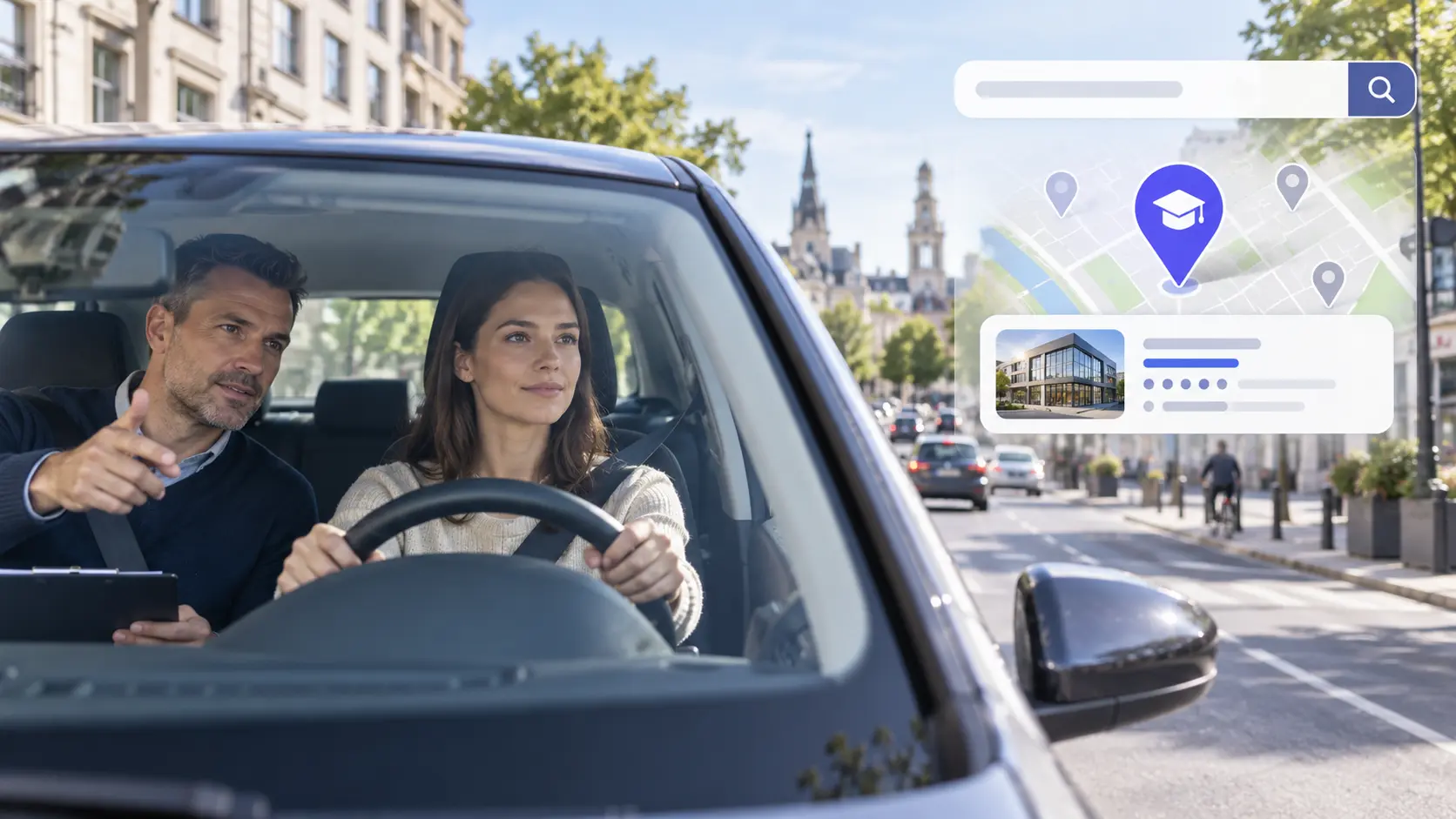
Nobody researches a driving school the way they research a mattress. There’s rarely a six-week comparison phase or a wishlist of five candidates saved for later. Someone reaches driving age, a family moves to town, or a work visa finally clears — and soon a parent or a nervous new driver is typing “driving lessons near me” into their phone. Schools that appear prominently and answer the right questions immediately have a much better chance of winning the booking.
Most driving school websites weren’t built with that moment in mind. They were built once, years ago, and left alone — a single generic page listing “lessons” with a phone number at the bottom. This guide is about fixing that, using the parts of SEO that actually matter for a business this local and this deadline-driven.
Why this is a local fight, not a national one
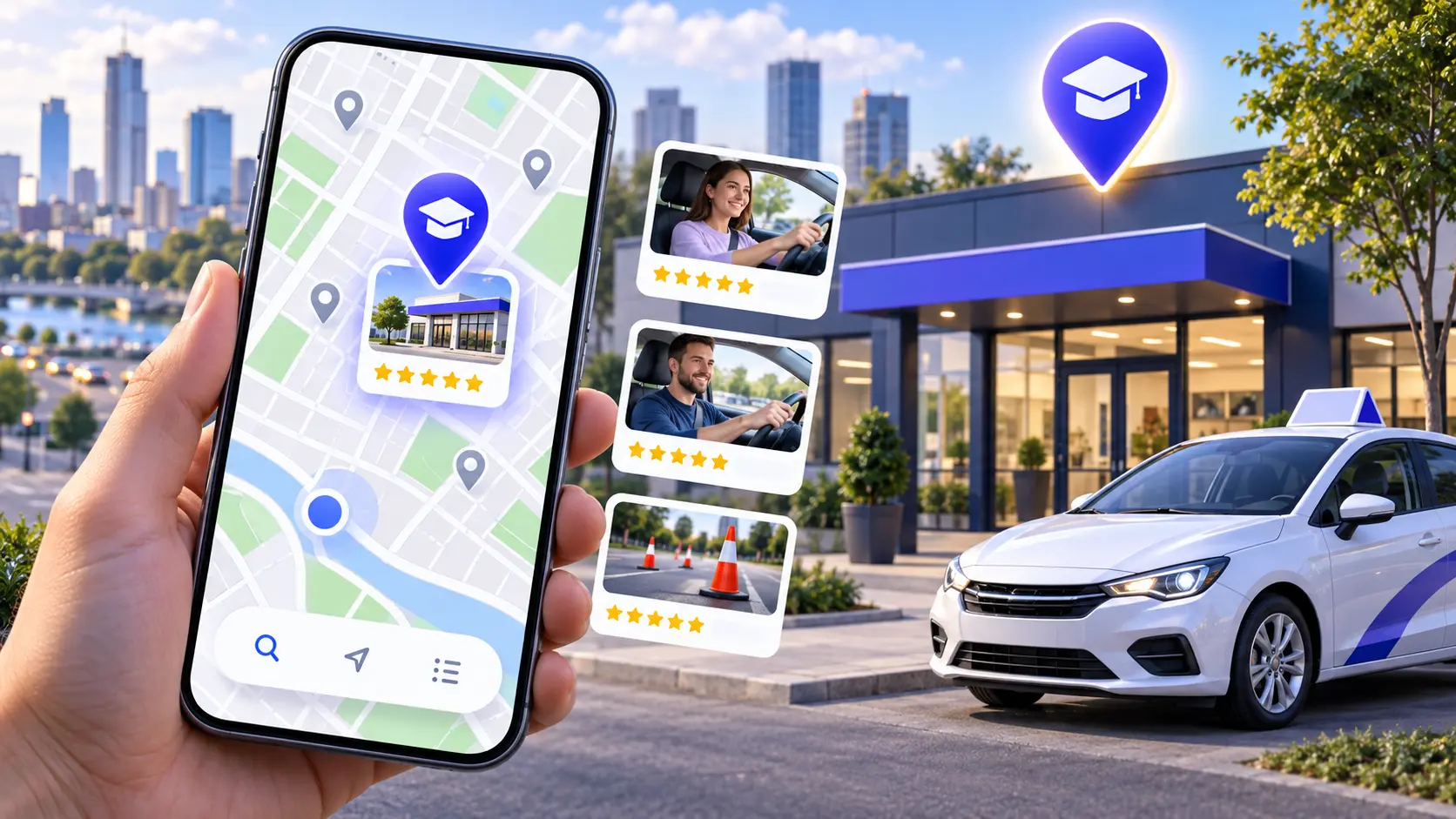
Few students want to travel a long distance for regular lessons. Most high-intent searches are tied to a location, and Google often gives the local map pack prominent placement for queries such as “driving school [city].” That changes the strategy: chasing the broad national term “driving lessons” means competing with major aggregators, while a relevant page for “automatic driving lessons in [neighborhood]” can target a smaller but much more qualified local audience.
The Google Business Profile category trap
Most driving schools set their category to the generic “Driving School” and stop there. That’s a missed opportunity — choose the most specific category currently available in your market that accurately describes the business, then add only relevant secondary categories. Google’s own category guidance confirms that categories affect local ranking and recommends selecting a specific primary category rather than treating categories as a list of keywords. Fill in every service area you cover, upload real photos (a car, an instructor, the actual office — not stock imagery), and keep your core business details accurate and consistent across your website, profile, and important directories.
Structure your site by lesson type and service area — not one page for everything
A single “Our Services” page can’t hold all the different reasons someone is searching. Split it out:
| Search intent | Best page | What to include |
|---|---|---|
| Teen driver’s ed | Dedicated teen program page | State requirements, permit process, package pricing |
| Adult / nervous driver | Adult lessons page | Pacing, patience, no-judgment framing |
| Manual vs. automatic | Separate pages per transmission type | Which one to choose, availability, instructor specialization |
| Specific neighborhood or suburb | Local service-area page | Coverage radius, pickup logistics, local test center familiarity |
| Test-day anxiety | Blog / FAQ content | What actually happens on test day, common fail reasons, how to prepare |
Each of these searches represents a genuinely different person with a genuinely different worry. A teenager Googling their first lesson and a 45-year-old who never learned to drive are not the same buyer, and a single all-purpose page serves neither of them particularly well.
Use instructor pages to build experience, expertise, and trust
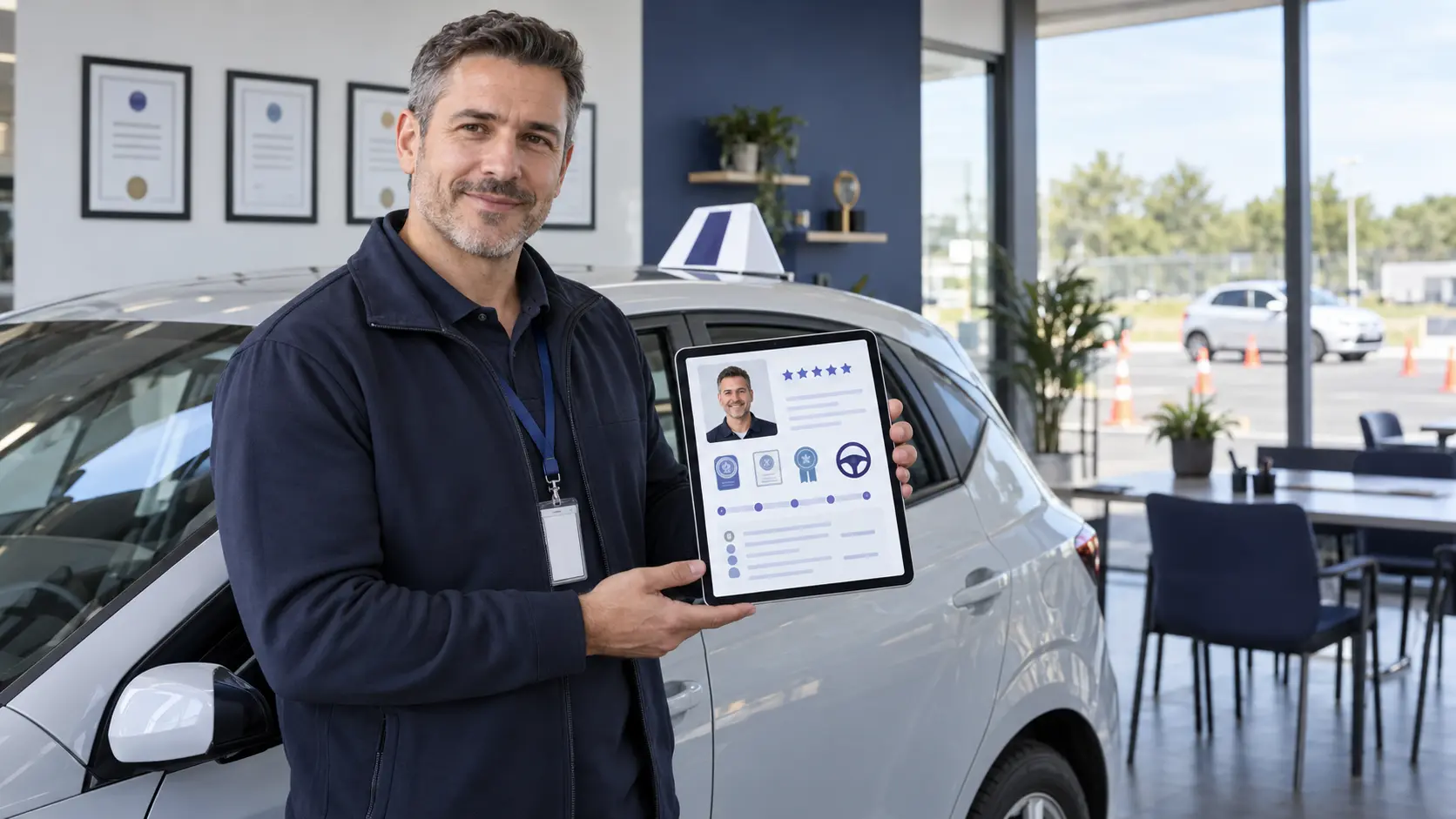
Choosing a driving school also means choosing the person who will sit beside the student during stressful first lessons. A strong profile page for each instructor can make that decision easier while giving the school visible evidence of real-world experience and expertise. Include a genuine biography, years of teaching experience, licence categories taught, languages spoken, specialist areas, relevant qualifications, certificates, awards, and a professional photograph. Where appropriate, add verified student reviews that mention the instructor by name.
Reviews: the window is shorter than you think
A driving school lives or dies by trust, and recent, authentic reviews are one of the clearest trust signals available to prospective students. Google also states that complete business information, reviews, positive ratings, and links can contribute to local visibility through relevance and prominence; its official local ranking guidance explains these factors directly. A practical moment to request a review is shortly after someone passes their road test, while the experience is still fresh. Respond to every review, including the critical ones; a calm, professional reply can reassure a hesitant parent or student.
Content that answers the question before the first phone call
Almost every new student, or their parent, has the same handful of anxieties before they ever call: how many lessons will this actually take, what happens if I fail the test, is automatic easier to learn than manual, what should I bring on test day. Answering these clearly and specifically — with your state’s actual requirements, not generic national advice — does two things at once: it ranks for exactly the searches a nervous parent runs at midnight, and it does a chunk of the sales conversation before the phone even rings.
Is your driving school showing up before your competitor’s?
Klucco can audit your local visibility, site structure, and content, then turn the findings into a plan built around how families actually search.
Backlinks from places that actually carry weight here
National driving blogs are not the only useful source of authority. Relevant local citations and links can come from chambers of commerce, community organisations, schools, colleges, local media, road-safety initiatives, insurance partners, and organisations you genuinely work with. Local Facebook groups can also generate recommendations and enquiries, although they should be treated primarily as a referral channel rather than a source of SEO link authority.
The multilingual opportunity almost nobody is targeting
Driving schools frequently serve multilingual communities, yet relevant local information is not always available in the languages students prefer to use. In many US markets, searches such as “clases de manejo cerca de mí” can represent valuable demand. If your school genuinely offers lessons in Spanish or another language, research that demand locally and build a properly localized page with accurate service information and hreflang annotations. Do not rely solely on browser translation, and do not create a language page for a service your instructors cannot actually provide.
Common Driving School SEO Mistakes
- Setting a generic Google Business Profile category instead of the most specific one that actually fits.
- Publishing thin instructor profiles without biographies, qualifications, experience, languages, or genuine evidence of expertise.
- Chasing the broad national term “driving lessons” instead of specific, local, high-intent searches.
- Waiting weeks after a passed road test to ask for a review.
- Relying on browser auto-translate instead of a real, properly connected localized page for non-English speaking students.
- Publishing generic “how to learn to drive” content instead of state-specific, locally accurate answers.
Turn local traffic into lesson bookings
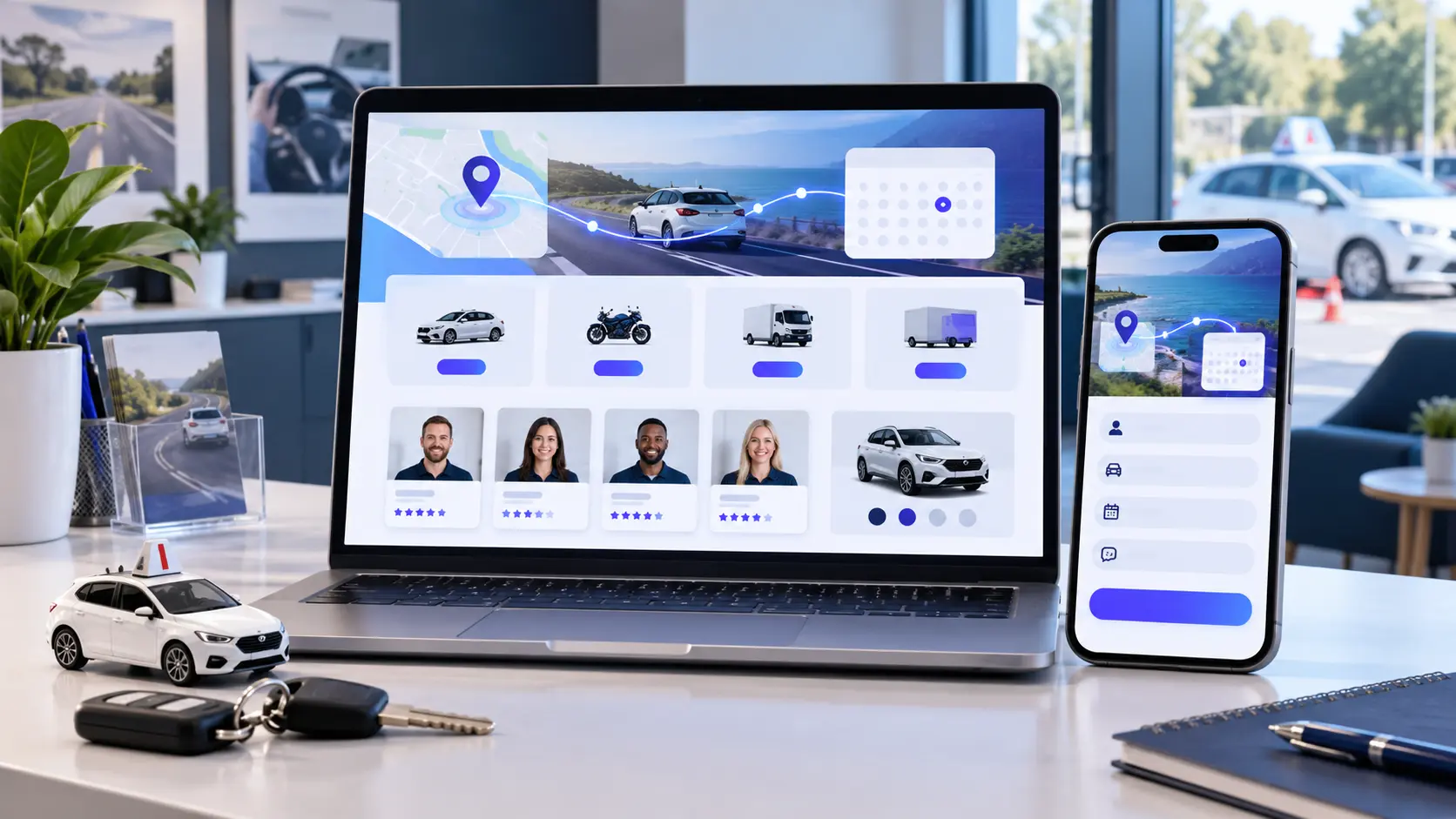
Visibility is only useful when the website makes the next step easy. A potential student should not have to call simply to discover whether you teach the right licence category, cover their area, or have any availability. Make the essential decision-making information easy to find:
- clear prices, packages, or at least an explanation of how pricing is calculated;
- the licence categories, lesson types, and transmission options you offer;
- service areas, pickup arrangements, and relevant local test centres;
- instructor profiles, qualifications, languages, and vehicle types;
- the expected training process and realistic information about duration;
- upcoming course dates or a clear way to check availability;
- real student reviews and pass stories without unrealistic guarantees;
- a short booking or enquiry form and a clickable phone number on mobile.
Track form submissions, phone clicks, booked assessments, and enrolments from organic search. Rankings and traffic matter, but the most useful SEO metric for a driving school is the number of qualified students who actually book.
Ready to fill next month’s lesson calendar?
Tell Klucco about your school and your service area. We’ll show you exactly where your visibility is leaking.
