



SEO for Real Estate: The Complete Guide for Agents and Agencies
A real estate website can look polished and still be invisible exactly when it matters — the moment someone searches “[neighborhood] apartments for rent” or “[city] real estate agent.” The problem is rarely a single missing keyword. Real estate sites compete against national portals, Google Maps results, and inventory that expires within weeks of going live. Winning useful visibility means all of those pieces reinforce the same thing: where the agency operates, what it specializes in, and why a searcher should trust it enough to call.
This guide covers real estate SEO from an agency owner’s perspective — Google Business Profile, neighborhood content, technical SEO specific to listing feeds, link building, and the structural problems that generic SEO advice tends to miss entirely. The goal isn’t more traffic for its own sake. It’s more qualified calls and inquiries from people who are actually looking in your market.
What is real estate SEO, and how is it different from general SEO?
Real estate SEO is the process of optimizing a brokerage or agent’s website so it ranks for the searches buyers, sellers, and renters actually run — “[neighborhood] homes for sale,” “[city] real estate agent,” “apartments for rent in [area].” What separates it from most other verticals is that the inventory itself expires. A listing goes live, then disappears within weeks once the property sells or rents — so a page built around one listing loses its reason to exist the moment the deal closes. Add direct competition against portals like Zillow, Realtor.com, or (in Germany) ImmoScout24, which carry far more domain authority than any local site will match, and real estate SEO becomes a game of winning hyper-local, high-intent searches the big portals treat as generic.
Why it matters: trust, not just traffic
Real estate SEO also sits under Google’s YMYL (Your Money or Your Life) umbrella — advice tied to a purchase this large gets held to a higher bar for expertise and trustworthiness than most content. Google’s own guidance on helpful, reliable content weights demonstrable expertise and clear authorship heavily for exactly this kind of decision. That’s a second reason organic visibility compounds here: a page-one ranking doesn’t just bring a click, it signals credibility the way a review count or a referral does. Paid ads can buy the click; they can’t buy that signal, and they stop the moment the budget runs out.
How buyers and renters actually search
Real estate keyword research isn’t about “real estate [city]” — that term is already occupied by marketplaces with dedicated SEO teams. It’s about the specific, local phrasing real people type: “3 bedroom apartment [neighborhood],” “best school districts near [city],” “how much is my house worth in [zip code],” “[suburb] HOA fees.” These long-tail, hyper-local terms carry lower volume individually but far higher intent — and they’re exactly the terms the national portals don’t bother targeting one by one.
Map content to the way people actually search
A single generic “Listings” page can’t rank effectively for every search, and it rarely gives a hesitant renter or buyer enough information to actually reach out. Build the structure around real search intent instead:
| Search intent | Best destination | Information to include |
|---|---|---|
| Browsing a neighborhood | Permanent neighborhood hub page | Overview, schools, average prices, transit, active listings linked in |
| A specific property | Individual listing page | Full details, photos, price, availability, contact route |
| A property type | Dedicated property-type page | What’s typically available, price range, who it suits |
| Finding an agent | Agent or team profile page | Credentials, service area, specialties, reviews |
| Research question | Guide or FAQ content | A direct answer, local specifics, route to contact an agent |
Content that builds authority — and survives past the sale

Most real estate SEO guides stop at “write neighborhood guides.” The part they miss: individual listing pages disappear from search the moment the property sells or the tenant signs, and if that listing page was the only thing ranking for “apartments in [neighborhood],” the ranking disappears with it. The fix is structural — build a permanent hub page for each neighborhood or property type you serve, one that stays live and accumulates authority over years regardless of which units are currently on the market, then link active listings into it.
Layer in genuinely local content the portals skip — school district comparisons, property tax rates by suburb, “best neighborhoods for young families in [city].” This is information the national portals don’t bother writing, and it’s exactly what someone relocating to your market is searching for.
Local SEO: Google Business Profile, citations, reviews
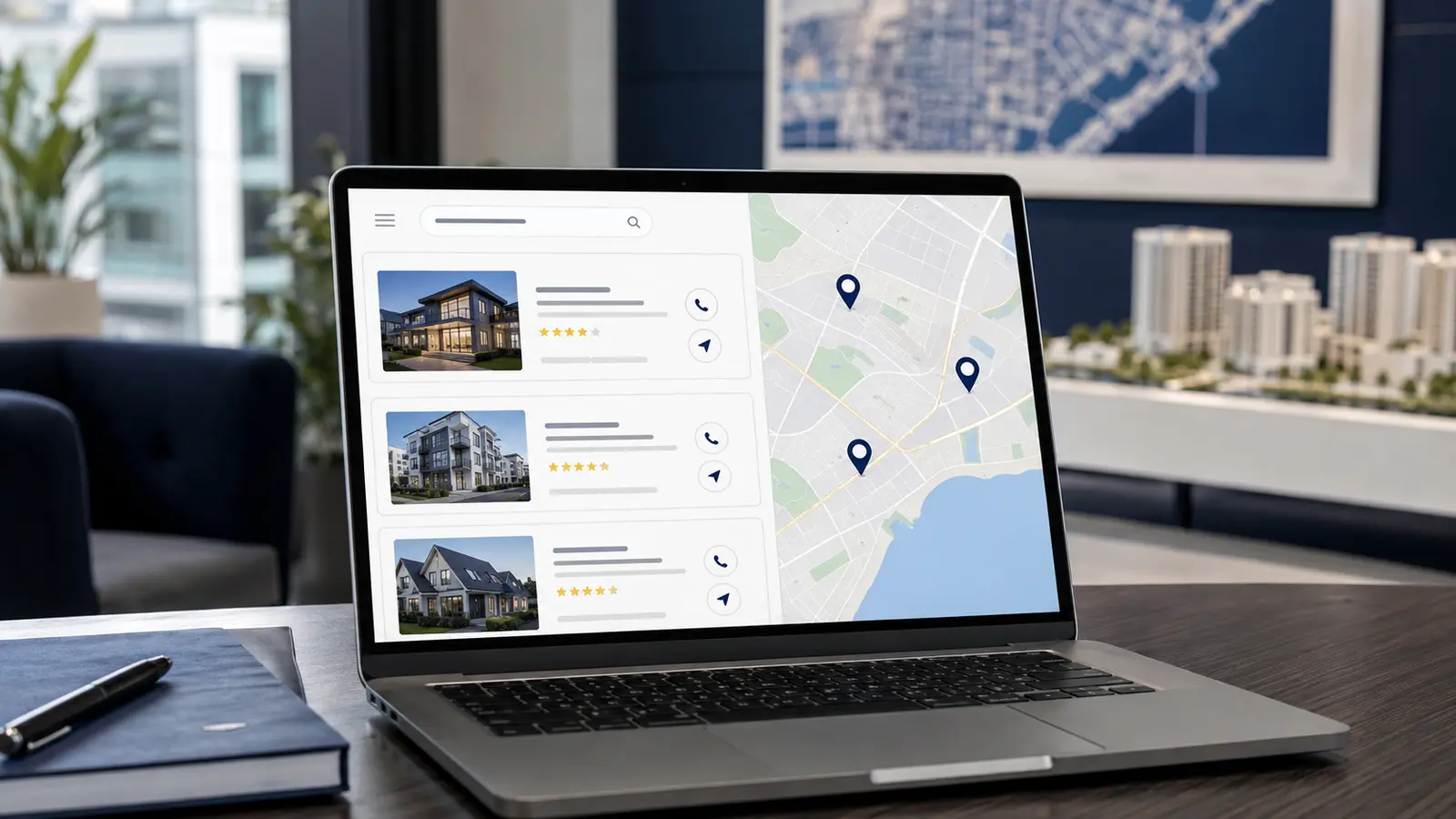
For “[city] real estate agent” and similar searches, most users never scroll past the Google Maps three-pack — so a complete, accurate Google Business Profile often drives more leads than a page-one organic ranking does. Correct categories, defined service areas, listings and updates posted regularly, and a steady flow of reviews all feed into it. Reply to every review, request them consistently after closings, and keep your NAP (name, address, phone) identical across your site, your GBP, and every directory — Yelp, local Realtor association sites, Chamber of Commerce listings. Google’s local ranking guidance confirms relevance, distance, and prominence drive map-pack results — prominence is the lever a strong, consistent profile and review history actually moves.
Technical SEO problems generic guides don’t mention
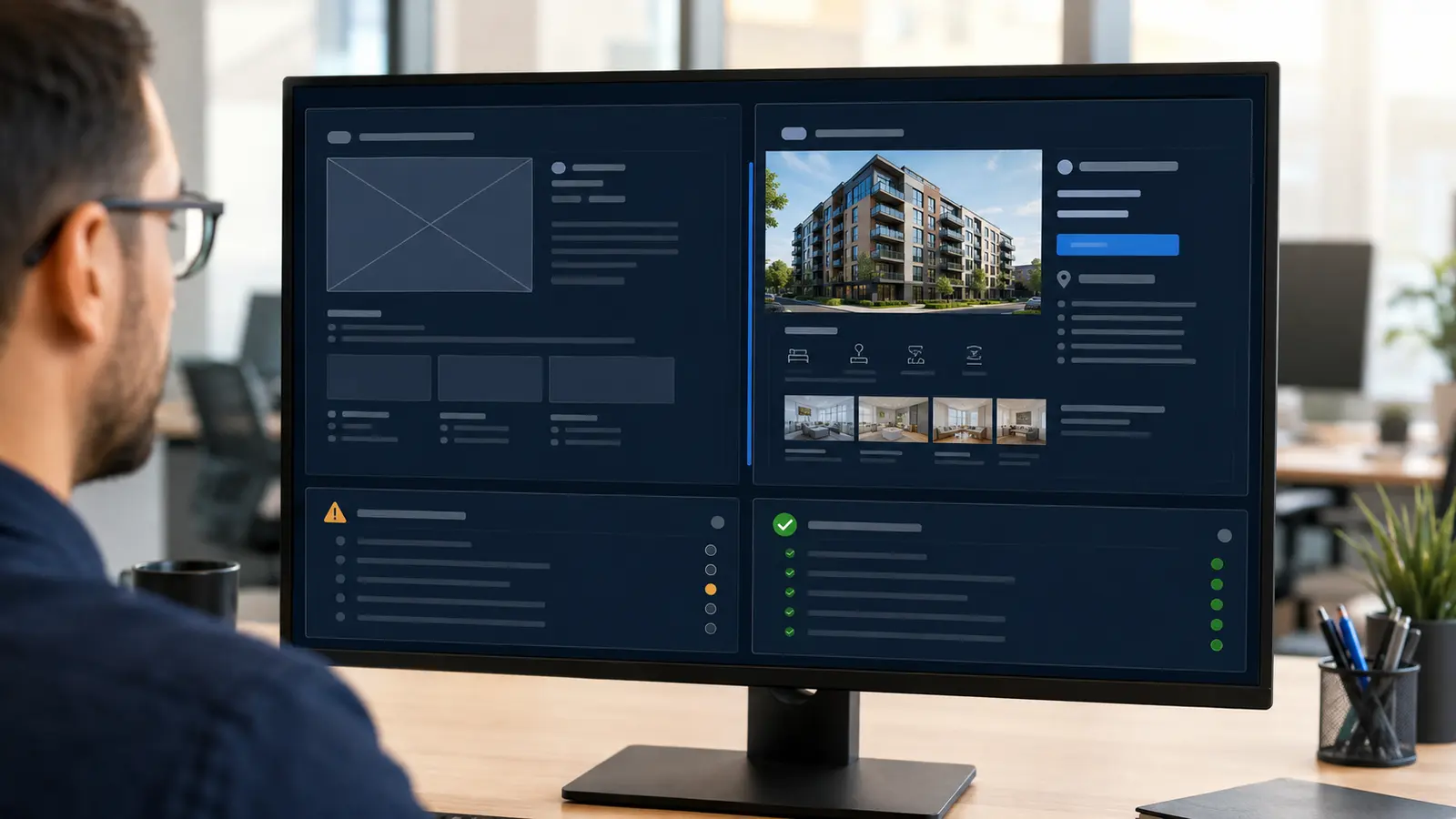
Most real estate SEO content treats “technical SEO” as a checklist item — clean URLs, mobile-friendly, fast load times. Real estate sites have specific failure points that rarely get named directly:
- MLS and IDX feeds that render invisibly. Many listing pages pull property details from an MLS or IDX feed and render them client-side via JavaScript after the initial page load. If a crawler can’t see the address, price, and description in the rendered HTML, that listing effectively doesn’t exist for search. Check this with the URL Inspection tool in Search Console — if the price and description aren’t visible in the rendered screenshot, the page needs a server-side rendering fix before anything else moves its ranking.
- Structured data that promises more than it delivers. Schema.org does define a
RealEstateListingtype, but it’s still listed as “new” in the vocabulary with low adoption, and it isn’t one of the rich-result types Google’s own documentation lists as supported — don’t expect it to change how a listing displays in search. What Google does support directly isVacation rentalschema, relevant if you’re marketing furnished or serviced units. For standard listings,LocalBusinessmarkup on the agency itself is the safer bet — it’s an officially supported feature, not just a hopeful attempt at one. - Photo-heavy pages that lose mobile visitors before they load. A single listing can carry 20-40 images, and unoptimized images are the single most common cause of slow load times on real estate sites — which matters more here than almost anywhere else, since the visitor came specifically to look at photos. Compress and lazy-load everything below the fold, and serve modern formats like WebP.
- Canonical tags and clean redirects. Resolve accidental duplicate listing URLs caused by tracking parameters or old MLS syndication paths, and canonicalize consistently rather than leaving Google to guess which version to index.
Avoiding cannibalization between listings and hub pages
This is the mistake almost no real estate SEO guide names directly: dozens of near-identical listing pages in the same neighborhood competing against each other, and against the neighborhood hub page, for the same search terms. Google can’t tell which one to rank, and often ranks none of them well. Canonical tags and a clear content hierarchy fix it — the hub page targets the broad neighborhood term, individual listings target their specific address and unit details — so the pages combine ranking signal instead of splitting it.
Is your listing inventory actually visible to Google?
Klucco can audit your rendering, indexing, local presence, and site structure, then turn the findings into a prioritized SEO plan.
How the strategy shifts by role
“Real estate SEO” isn’t one strategy — what a listing agent needs is different from what a commercial broker or a vacation rental manager needs, even though the mechanics (local SEO, hub pages, technical fixes) stay the same.
- Residential agents win most from neighborhood-specific hub pages and a strong Google Business Profile — the searches that convert are hyper-local (“homes for sale in [area]”), and reviews plus map-pack visibility often outperform organic rank for driving calls.
- Commercial brokers deal with long-tail, niche terms (“warehouse for sale in [city]”) and larger inventories, so crawlability and structured data on every listing matter more than content volume — a corporate tenant searching for space is a smaller, higher-value audience than a residential buyer.
- Luxury realtors compete on trust signals as much as rankings. Search behavior skews toward specific, detailed queries (“luxury estate in [city] with ocean views”), and site speed and image quality directly affect whether an affluent buyer keeps looking or leaves.
- Developers need SEO before a project breaks ground — landing pages optimized for the development name and area, structured data, and local press coverage build search visibility ahead of any physical inventory to show.
Vacation rental and serviced apartment managers are worth a closer look, because this is a segment growing fast and largely unclaimed. Furnished, mid-term rentals sit between hotel booking behavior and traditional real estate search — guests search with intent closer to “monthly apartment rental [city]” than either “hotel” or “apartment for rent” — and neither big OTAs nor real estate portals target that phrasing precisely. We’ve done this analysis for a German serviced apartment operator: mapping out where their real audience actually falls between hotel bookings, long-term rentals, and furnished mid-term stays, then structuring the site’s content around that specific middle search intent rather than generic “apartment” terms. It’s growing in German cities specifically as corporate relocation and longer, less location-bound stays become more common, and the same shift is visible in English-speaking markets as remote work extends “temporary” housing from weeks into months. The operators who win this kind of search aren’t the ones with the biggest portfolio — they’re the ones whose pages are structured around the exact, narrow search someone runs at 11pm while trying to find housing before a relocation.
Link building and digital PR for local real estate
You won’t out-link Zillow. What you can get that no national portal has access to: local Chamber of Commerce directories, sponsorships of community events, guest posts on local news and lifestyle sites, and partnerships with local mortgage brokers and inspectors who link back to your resource pages. A newsworthy local angle — a record sale, a new office opening — is also a legitimate press release, and coverage from a local outlet carries far more relevance signal for “[city] real estate” searches than a generic national mention would.
Common Real Estate SEO Mistakes

- Letting listing pages carry all your ranking signal for a neighborhood term instead of building a permanent hub page.
- Rendering price and description client-side via JavaScript so Google can’t see what’s on the page.
- Creating dozens of near-identical listing pages that compete against each other for the same search terms.
- Chasing broad city-wide terms before building out low-competition, hyper-local neighborhood content.
- Inconsistent NAP data across the website, Google Business Profile, and directories.
- Publishing generic “how to buy a house” content that competes against national portals with far higher domain authority.
Ready to turn local searches into qualified inquiries?
Tell Klucco which neighborhoods and property types matter to your business. We’ll identify the visibility gaps and recommend the next practical step.
